
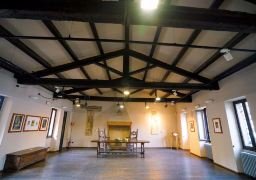
Verona, located in Northern Italy, is the hometown of Romeo and Juliet as depicted by Shakespeare. The House of Juliet is situated near the historic center’s Herb Square, once owned by the prestigious Capulet family of Verona. This ancient building, constructed in the 13th century, features high walls and large courtyards with round archways. Admission to the courtyard is free, but a fee is required to visit the second floor. Upon entering the gate, one is greeted by an antiquated courtyard surrounded by three walls of buildings, three stories high, with a cobblestone ground and ivy-covered walls in earthy hues. Directly opposite the gate, against the courtyard wall, stands a bronze statue of Juliet. It is said that touching Juliet’s right breast while making a wish will grant her sincere blessings, helping lovers to become a couple. On the right side of the courtyard, one can see the world-famous ‘Juliet’s Balcony’. The balcony is modest in size, adorned with simple patterns and flanked by two small windows. It was here that Romeo and Juliet met in secret, confessing their love, with Romeo climbing up to the balcony to pledge their lives together. For an additional fee, visitors can enter the balcony for a photo. Additionally, there is a famous ‘Wall of Love’ within the courtyard, located beneath the balcony. The wall is densely covered with names written and pasted together in various languages, encircled with hearts, pierced by Cupid’s arrows, and decorated with various colors and patterns. It is believed that writing the names of two lovers together on the wall can make their love last forever. In the reception hall of the House of Juliet, the walls are adorned with frescoes, and a bust of Shakespeare is placed in the corner. Beside the stairs, a conspicuous stand holds a large wooden book, open to a page showing a black and white photograph from the 1936 film ‘Romeo and Juliet’, with the couple tenderly leaning on each other, while the right page features dialogues from the play where the characters confess their love. This open book guides visitors through the various rooms where Juliet lived. The scenes in the book extend through the different rooms based on their themes, such as the masquerade ball, love at first sight, bedroom meeting, priest’s marriage ceremony, Juliet’s resistance to marriage, and her tragic death in the cemetery, which interested visitors can explore. Ascending the stairs leads to the interior of the house. There are more than a dozen rooms open on the upper floor, furnished with beds, tables, chairs, wardrobes, and other simple furniture and decorations, all in a style that is both simple and dignified. In the center of the second-floor hall, there is a circle of glass display cases filled with drawings by renowned painters from various periods, depicting scenes from Shakespeare’s ‘Romeo and Juliet’. The street outside the House of Juliet is lined with small shops selling Romeo and Juliet souvenirs, including one specializing in embroidering text on aprons.
Inside the store, a variety of aprons are on display for tourists to choose from at their leisure. The store offers embroidery services to personalize each apron according to the tourists’ preferences, often with the names of lovers or expressions of love. The price for an apron with embroidery ranges from 15 to 20 euros, making it a perfect keepsake for those who appreciate it. The opening hours are Tuesday through Sunday from 9:00 AM to 7:00 PM; the house is closed all day on Mondays. The specific operating status on public holidays and special dates is subject to the daily opening conditions. Accessibility services: There are no special accessibility services available. Essential tips for visitors: 1. Please maintain silence and avoid loud noise when touring the interior of the house; 2. If interested, it is recommended to read the original work before visiting.


Related Content:
 Qixi Festival | Celebrate the Moment with Beautiful Scenery and Love at Marriott International Hotels in China
 A Magical Journey to Shanghai with Kids: Exploring Songcheng and Dinosaur Adventure
 Jiangnan Song City: Scenic Beauty, Hakka Cradle, and Fun in Ganzhou!
 National Day Holiday: Exploring the Shimao InterContinental
 A Tranquil Escape to Anlu: A Three-Day, Two-Night Journey into the Past with My Child
 Top Shanghai Family Attraction: Baoyan Amusement Park for a Fun Summer!