
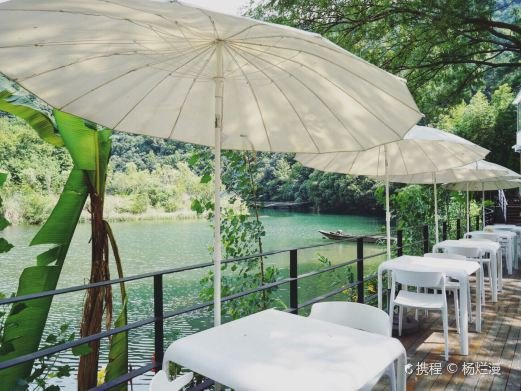
Guanghui Palace, commonly known as Zhangwang Temple, is a well-known Taoist temple with a long history of more than 900 years in Nanxun. Its history is even longer than the establishment history of Nanxun Ancient Town. At the time of its construction, the high deities of Taoism, the ‘Three Pure Ones’, were enshrined inside. Zhang Shicheng, the leader of the peasant uprising at the end of the Yuan Dynasty, once built granaries here and occupied Guanghui Palace as his temporary palace. Thus, Guanghui Palace became Zhangwang Temple. For hundreds of years, Guanghui Palace, like Taoism struggling to survive and develop in hardships, has gone through vicissitudes and experienced repeated processes of destruction and reconstruction. The Guanghui Palace you see now is the appearance after a reconstruction in 2003, basically presenting its original look. The entire architectural complex of Guanghui Palace is composed of Milo Pavilion, Dongyue Hall, Chenghuang Hall, Leizhen Hall, Sanqing Hall and the temporary palace of the Kitchen God. Behind the majestic faces of the deities lies the compassion to soothe all living beings. The temple is solemn and mysterious. The yellow walls and upturned eaves are intermittently lined with deities holding swords and knives. They have witnessed the rise and fall of Nanxun Ancient Town. In the eyes of people in Nanxun, they are the guardians of this small town. The specific business hours and operating status are subject to the opening situation on that day.
Related Content:
 Suzhou, Shanghai, Zhejiang: A 3-Person Self-Drive Adventure
 Follow Xia Ningbao to the Jiangnan water town – Zhujiajiao Ancient Town.
 West of Tibet, Towards the Scorching Mountains and Rivers
 Self-Drive to Shaoxing, Pilgrimage to the Zhejiang Version of ‘Potala Palace’
 Jiangnan Song City: Scenic Beauty, Hakka Cradle, and Fun in Ganzhou!
 Zhengzhou – Nanjing – Wuxi – Shanghai, Leisure Self-driving All the Way, Feel the Midsummer Time!