
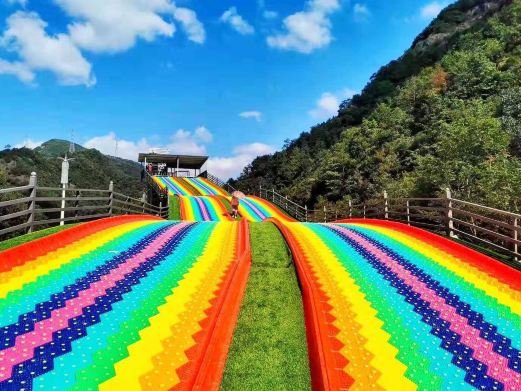
Haian is a place where the Yangtze River culture and the Huai River culture converge. The discovery of the Qingdun site in Haian has caused a sensation in the archaeological world, pushing Haian’s history back 3000 years. Consequently, the Qingdun culture is recognized as an important part of Chinese culture—the origin of the Jianghuai culture.
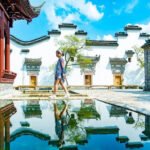
With its long history and ancient civilization, Haian on the Jianghuai plain is more charming, and the Jianghuai Cultural Park was created accordingly. The park boasts classical Chinese garden landscapes, surrounded by a lake of 30,000 square meters, and is a cultural landscape with a foundation in Jianghuai historical culture.
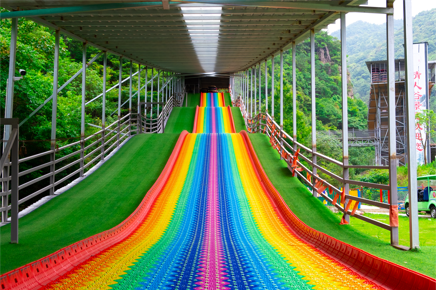
The entire park is composed of four major scenic areas: the White Dragon’s Hometown, the Sages’ Area, the Fengshan Academy, and the Chinese Celebrity Art Museum Complex. The White Dragon’s Hometown includes tens of thousands of square meters of Bai Long Lake, dozens of pavilions, platforms, towers, buildings, corridors, bridges, and hundreds of rare flowers, ancient trees, and peculiar rocks. Notably, the national rare protected tree species—yew—has been successfully transplanted and grown into a forest in the scenic area.
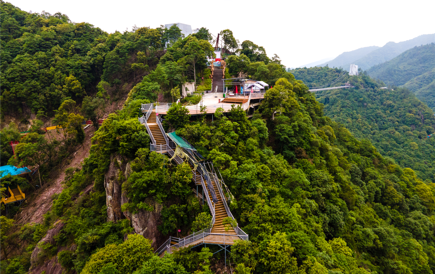
The Sages’ Area restores ancient Haian architecture, built in honor of three historical sages—Wen Tianxiang, Fan Zhongyan, and Hu Yuan (Anding)—who had connections with Haian. It serves as a place to commemorate the sages, inspire and educate future generations, and promote the inheritance of traditional Chinese culture.
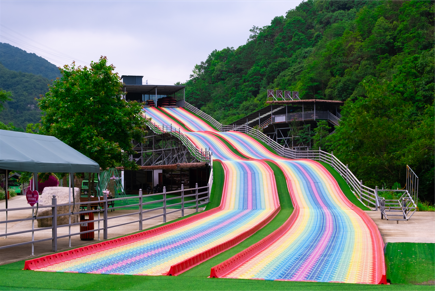
The Fengshan Academy is also a restoration of an ancient Haian landscape, an important venue where successive generations of sages, scholars, and Confucianists have promoted education and civilization.
Related Content:
 839th Episode: Bustling Eastern Water Capital, Twin Dragons Play Pearls on the Huangpu River Beach
 Jiangnan Song City: Scenic Beauty, Hakka Cradle, and Fun in Ganzhou!
 National Day Holiday: Exploring the Shimao InterContinental
 Zhengzhou – Nanjing – Wuxi – Shanghai, Leisure Self-driving All the Way, Feel the Midsummer Time!
 Summer Vacation in Shanghai: Must-Visit Spots to Bookmark
 Exploring the Roots of Shanghai: The Charm of Songjiang as an Internet Sensation