

Shui Yue Zen Temple is located at the northwestern foot of the ethereal Peak, named for its elusive appearance amidst the clouds and mist, resembling a flower in a mirror or the moon in water, thus earning its name. The temple’s location, Shui Yue Valley, also derives its name from the temple.
Originally constructed in the fourth year of the Da Tong era during the Southern Dynasties Liang period (538 AD), it is a renowned Buddhist temple in the Jiangnan region, reputed to be the birthplace of the ‘Water Moon Guanyin’ statue, one of the thirty-six forms of the Bodhisattva Guanyin. The temple was abandoned during the Sui Dynasty but was restored in the early Tang Dynasty and renamed Ming Yue Chan Yuan. In the Northern Song Dynasty, Emperor Zhenzong bestowed the name Shui Yue Chan Yuan and a golden plaque with his imperial calligraphy.
Related Content:
 Suzhou, Shanghai, Zhejiang: A 3-Person Self-Drive Adventure
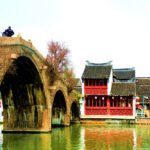 Follow Xia Ningbao to the Jiangnan water town – Zhujiajiao Ancient Town.
 Chibi Maruko-chan’s National Trend Fantasy Journey (Macau Station)
 West of Tibet, Towards the Scorching Mountains and Rivers
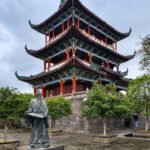 Jiangnan Song City: Scenic Beauty, Hakka Cradle, and Fun in Ganzhou!
 Embrace the Serenity of Changshu Amidst Green Hills and Historic Charm