
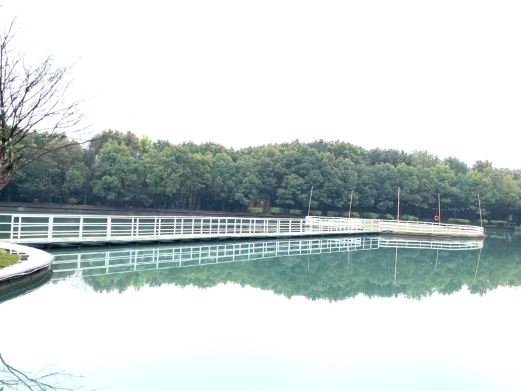
Located at the foot of Jingai Mountain in the southern suburb of Huzhou City. Xiagucheng is adjacent to Dongtiaoxi in the southeast and backed by Jingai Mountain in the north. It was the county seat of Gucheng County of the State of Chu and Wucheng County established by the Qin Dynasty during the Warring States Period. Xiagucheng is named because ‘the city faces the brook and marsh, and wild rice plants are everywhere in sight’. It was built in the 15th year of King Kaolie of Chu in the Warring States Period (248 BC). The Xiagucheng Ruins are one of the ancient city ruins in the southeastern provinces of China with an earlier age and relatively complete preservation. There are two circles of inner and outer cities in Xiagucheng. The area of the outer city (double city) is about 200,000 square meters. The inner city (sub-city) is located in the southeast corner of the outer city, with an area of about 80,000 square meters. The city walls of Xiagucheng are all rammed with loess. The city walls of Xiagucheng are 6 to 9 meters high, the upper part is 3 to 5 meters wide, and the bottom is 20 to 30 meters wide. The cross-section is trapezoidal. The city walls of Xiagucheng are mixed with stamped pottery, original celadon and sandy pottery pieces. On the nearby mountaintops are the buildings of the ancient ‘beacon towers’ in people’s legends. In modern archaeology, they are called earthen mound tombs and stone chamber tombs. Currently, in the inner city of the Xiagucheng Ruins, there is a commemorative wall for the Xiagucheng Ruins, which is 3 meters high and 18 meters wide. It is made of granite and engraved with the long history of Xiagucheng. The specific business hours and opening status are subject to the opening situation on that day.
Related Content:
 West of Tibet, Towards the Scorching Mountains and Rivers
 Suzhou, Shanghai, Zhejiang: A 3-Person Self-Drive Adventure
 Jiangnan Song City: Scenic Beauty, Hakka Cradle, and Fun in Ganzhou!
 Taking the High-Speed Rail to Shangri-La, Farewell to the City of Sun and Moon in My Heart
 Zhengzhou – Nanjing – Wuxi – Shanghai, Leisure Self-driving All the Way, Feel the Midsummer Time!
 839th Episode: Bustling Eastern Water Capital, Twin Dragons Play Pearls on the Huangpu River Beach