Yongchang Fort, also known as Xincheng, is a fortress from the Ming Dynasty, constructed in 1558 (the 37th year of the Jiajing era). During the Ming Dynasty, the coastal area of Wenzhou was frequently invaded by pirates known as Wokou. The local anti-pirate leader Wang Pei and his nephew Wang De sacrificed their lives in the struggle. Subsequently, the brothers Wang Shuguo and Shu Dai initiated the construction of this fortress to resist the Wokou. The fortress is rectangular in shape, measuring 738 meters in length from north to south, 445 meters in width from east to west, with a perimeter of 2366 meters and walls that stand 8 meters high and 4 meters wide at the base. The walls were built with slanted stone blocks and rammed earth in the middle. A moat surrounds the fortress, and two canals were dug inside, with residents living on either side of the canals, creating an orderly and impressive scene. The banks of the moat are constructed with slanted square granite blocks to facilitate water and land transportation, irrigation, and washing. The fortress originally had over 100 acres of paddy fields, which could be utilized for self-sufficiency in emergencies, ensuring the security of both military and civilians. This demonstrates the careful planning and foresight of the time.
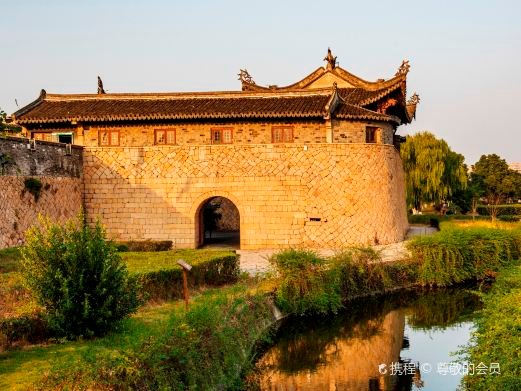
Yongchang Fort now preserves many ancient residences and ancestral halls, such as the Hall of the Capital, the Premier’s Mansion, the Imperial Decree Lane, the Hall of the Scholar-Officials, the Provincial Administration Hall, the Bluestone Gate Platform, the Ancient Garden Well, Dongqiao Bottom No. 40, the Censor’s Lane No. 12, the Grand Ancestral Hall, the Lower Hall Ancestral Hall, and the Premier’s Lane No. 6, as well as several ancient bridges, all of which hold high historical and cultural value. The fort is open to the public all year round from 8:00 am to 5:00 pm.