
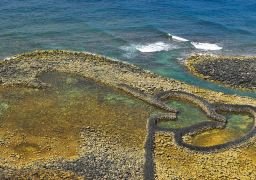
Stone weirs are large-scale collectibles found in the intertidal zones of the Penghu Islands, Taiwan, representing a traditional trap fishing method that dates back to the Neolithic Age
The total number of stone weirs in the county exceeds 580, making them a distinctive feature of the coral reef fishing culture
Constructed in the intertidal area, stone weirs consist of an arc-shaped stone wall, which is divided into several parts including the weir dam, weir room, weir gate, and fish well
They function by flooding the top of the stone wall with seawater during high tide, which brings in fish schools, and trapping them inside when the tide recedes
The principle relies on the ebb and flow of tides and the migratory patterns of fish
The construction of these arc-shaped stone walls on the fluctuating sea surface is a massive undertaking, often requiring the involvement of the entire village and taking several years or even decades to complete
The Penghu Stone Weir Season is a highlight of Penghu tourism, offering visitors a unique stone weir journey, with artist performances and an opening ceremony
Other activities include stone weir fishing experiences, where tourists can follow the weir owners into the weir room during low tide to catch fish trapped inside, complemented by a Penghu food carnival and more
These events create a grand atmosphere, making stone weirs an excellent cultural tourist attraction in Penghu and boosting local tourism
The stone weirs are open all year round and accessible 24/7
Accessibility services include wheelchair-accessible parking and entrances
Related Content:
 Jiangnan Song City: Scenic Beauty, Hakka Cradle, and Fun in Ganzhou!
 Qixi Festival | Celebrate the Moment with Beautiful Scenery and Love at Marriott International Hotels in China
 National Day Holiday: Exploring the Shimao InterContinental
 ‘Beautiful China, Happy Journey’: The main venue of the 2023 ‘May 19 China Tourism Day’ is located in Tengchong, Yunnan
 Follow Xia Ningbao to the Jiangnan water town – Zhujiajiao Ancient Town.
 A Tranquil Escape to Anlu: A Three-Day, Two-Night Journey into the Past with My Child