
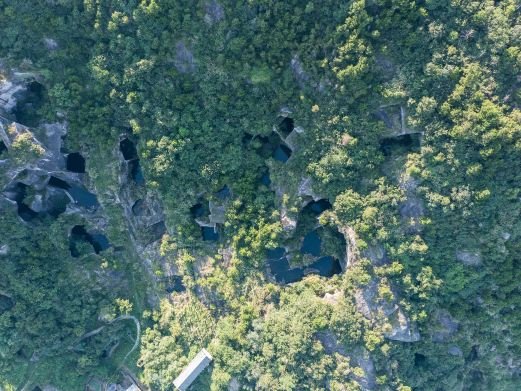
Intelligent Landscape of ShuiShan is the only coastal grottoes group in Ninghai – Wushan Grottoes, following the opening of the Buzhou Divine Mountain. Unlike the magical and magnificent Buzhou Divine Mountain, which showcases the perfect combination of ancient stone quarrying wonders and nature, the Intelligent Landscape of ShuiShan is uniquely creative, creating a wisdom-themed park that integrates sculpture, images, objects, and scenes to highlight the perfect combination of wisdom and nature.
Wushan Grottoes possess abundant ancient quarrying cave resources. Through the overall observation and artistic imagination of professionals, slightly damaged rocks are carved to integrate with the surrounding rock mass, forming a large stone carving art piece. This millennial cooperation between modern artists and ancient craftsmen will become a model of artistic development that protects history and achieves a win-win situation. At the same time, the themes of the carvings are consistent or compatible with the intelligent theme of the scenic area. This finishing touch can be regarded as turning stones into gold and turning waste into treasure.
Related Content:
 Suzhou, Shanghai, Zhejiang: A 3-Person Self-Drive Adventure
 Follow Xia Ningbao to the Jiangnan water town – Zhujiajiao Ancient Town.
 Jiangnan Song City: Scenic Beauty, Hakka Cradle, and Fun in Ganzhou!
 Spring Outing and Admiring Flowers, Live up to the Spring Scenery. A Brief Note on Cherry Blossom Appreciation in Wuxi, Jiangsu in March 2023
 West of Tibet, Towards the Scorching Mountains and Rivers
 National Day Holiday: Exploring the Shimao InterContinental