
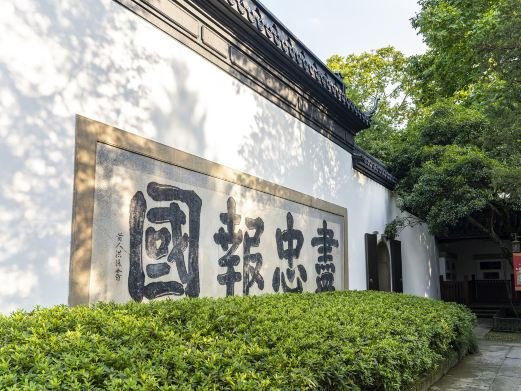
The Pinghu Museum was established in 1958. It is a venue integrating functions such as collection, protection, research, education, and archaeological investigation. The museum consists of the main building and an office building. The main building includes the cultural relics storehouse, fixed exhibition halls, multi-functional exhibition halls, and an academic lecture hall. There are two permanent exhibitions in the museum, namely the ‘Cultural Relics and Historical Sites Exhibition’ and the ‘Calligraphy and Painting Exhibition’. The cultural relics collection of the Pinghu Museum is very rich. For example, Majiabang culture red pottery trumpet-shaped beans, Liangzhu jade cong and stone spade-shaped tools, Tang Dynasty bronze Buddha heads, and Ming Dynasty rhinoceros horn cups are all extremely valuable. In particular, the collections of calligraphy and painting from the Ming, Qing, and modern times, such as the running script scroll by Wen Zhengming of the Ming Dynasty, the figure scroll by Xinluo Shanren of the Qing Dynasty, the landscape scroll by Zhang Daqian of modern times, and the works of various artists of the ‘Shanghai School’ in the late Qing Dynasty such as Wu Changshuo and Ren Yi, are numerous in quantity and high in quality, which is a major feature of the Pinghu Museum. Opening hours: closed all day on Mondays throughout the year; open from 09:00 to 17:00 from Tuesdays to Sundays throughout the year. The specific business status is subject to the opening situation on the day.
Related Content:
 Jiangnan Song City: Scenic Beauty, Hakka Cradle, and Fun in Ganzhou!
 839th Episode: Bustling Eastern Water Capital, Twin Dragons Play Pearls on the Huangpu River Beach
 Follow Xia Ningbao to the Jiangnan water town – Zhujiajiao Ancient Town.
 Suzhou, Shanghai, Zhejiang: A 3-Person Self-Drive Adventure
 Self-guided Tour of Five Places in Eight Days: Shanghai, Guangzhou, Zhaoqing, Macau and Nanjing
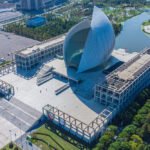 Explore the China Maritime Museum and Hear the Tales of the Sea